


When these systems are pushed to their limits—sometimes running day and night for months—the risk of carbon monoxide leaks increases significantly. Understanding why this happens and how to prevent it is key to protecting your family, guests, and occupants throughout the winter.
Why do carbon monoxide issues increase during Colorado winters?
Colorado winters are not gentle on heating systems. Extended cold snaps, sudden snowstorms, and temperature swings place constant stress on furnaces, particularly older units or systems that haven’t received regular maintenance.
One of the most common causes is simple overuse. During peak winter months, furnaces in Denver and Aurora often run nearly nonstop. This constant operation accelerates wear on internal components and increases the chance of combustion problems that can lead to carbon monoxide buildup.
Another frequent winter-related issue is airflow obstruction. Heavy snow and ice can block exterior exhaust and intake vents, preventing the furnace from venting combustion gases properly. When airflow is restricted, those gases—including carbon monoxide—can be forced back into the home through the duct system instead of exiting safely outdoors.
This scenario is far more common after major snowstorms, which are a regular part of life in Colorado.
The hidden danger of a cracked heat exchanger
Perhaps the most serious furnace-related carbon monoxide risk is a cracked heat exchanger. This component separates combustion gases from the air that circulates through your home. When it’s intact, the system operates safely. When it’s cracked—even slightly—carbon monoxide can mix directly with the warm air being delivered to every room.
Colorado’s climate makes this problem more common than many homeowners realize. Years of operating in a high-altitude, cold-weather environment cause repeated expansion and contraction of furnace components. Over time, this thermal stress increases the likelihood of a cracked heat exchanger, especially in older systems common across Denver and Aurora.
A cracked heat exchanger often develops quietly, without obvious warning signs, which is why it’s frequently discovered only during a professional safety inspection.
This is one of the key reasons carbon monoxide and furnaces are so closely linked in winter safety discussions. A furnace can still appear to “work” while quietly creating a serious indoor air hazard.
Furnace systems vs. boilers: Why the risk is different?
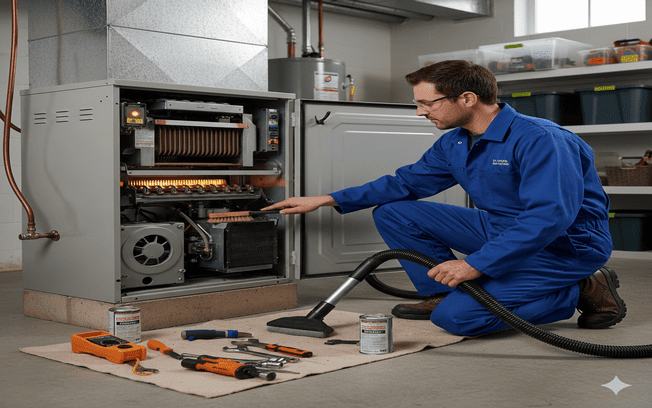
Not all heating systems behave the same way when problems occur. Boilers distribute heat through hot water or steam, while furnaces rely on forced air and ductwork. When a furnace produces carbon monoxide due to combustion issues, that gas can travel quickly through the duct system, reaching bedrooms, living spaces, and common areas in minutes.
That distribution speed is what makes furnace-related carbon monoxide issues particularly dangerous, especially in multi-story homes, hotels, and commercial buildings common throughout the Denver metro area.
Warning signs homeowners should never ignore
Carbon monoxide may be invisible, but furnaces often give early warning signs when something isn’t working as it should. Knowing what to look for can make all the difference during Colorado’s long heating season.
Pay close attention to the following signs:
- Changes in burner flame color. A healthy furnace flame should burn steady and blue. Yellow or orange flames often indicate improper combustion, which increases carbon monoxide production.
- Excessive condensation on windows. Unusual moisture buildup, especially during cold weather, can signal ventilation or combustion issues.
- Soot or dark residue near the furnace. Any soot around the unit or venting system is a red flag that combustion gases may not be venting properly.
- Unusual furnace behavior. Inconsistent operation, short cycling, or performance changes that don’t seem normal for your system should never be ignored.
Health-related symptoms can be just as important to recognize, particularly when they seem to follow a pattern:
- Headaches, dizziness, nausea, or fatigue that appear while indoors and improve after leaving the home may be early indicators of carbon monoxide exposure.
These warning signs are often dismissed as “normal winter issues” or seasonal illness, especially during cold months in Colorado. However, taking them seriously and acting early is one of the most effective ways to prevent carbon monoxide-related emergencies.
How Colorado homeowners can protect their families
Carbon monoxide safety doesn’t require panic—it requires preparation. To ensure your home remains a safe haven this winter, follow these essential steps:
- Install carbon monoxide detectors. This is your first and most essential line of defense. Ensure detectors are installed near all sleeping areas and on every level of your home. These devices provide the early warning needed to act before carbon monoxide levels become dangerous.
- Prioritize professional furnace maintenance. An annual tune-up and safety inspection is just as important as having a detector. Our trained technicians thoroughly evaluate critical components, including the combustion process, venting system, and the heat exchanger, to ensure everything is functioning correctly.
- Preventive problem detection. Professional inspections are specifically designed to catch “hidden” hazards—such as airflow obstructions or early signs of a cracked heat exchanger—long before they pose a serious risk to your household.
- Tailored solutions for Colorado. At Aether Mechanical, our safety inspections are designed specifically for Colorado’s high-altitude conditions and harsh winters, where proper combustion, airflow, and venting are critical for carbon monoxide safety. Our goal goes beyond system efficiency; we focus on ensuring your heating system operates safely throughout the harshest months of the year.
While protecting your home is a priority, carbon monoxide safety takes on an even larger scale when it comes to shared spaces. For those managing larger properties, the risks—and the responsibilities—multiply.
Carbon monoxide safety in commercial and multi-family buildings
For property managers, hotel owners, and commercial building operators, carbon monoxide safety carries even greater responsibility. Higher occupancy levels and continuous furnace operation increase both risk and liability. A single malfunctioning unit can affect dozens of occupants, making proactive monitoring essential.
Regular inspections and preventive maintenance help protect occupants while ensuring compliance with local Colorado safety codes and avoiding unexpected system failures—and costly emergency repairs—during peak winter demand.
Frequently Asked Questions About Carbon Monoxide and Furnaces
1. How do I know if my furnace is leaking carbon monoxide?
Carbon monoxide is invisible and odorless, so you cannot rely on smell alone to detect a leak. However, certain warning signs may indicate a problem with your furnace. Yellow or orange burner flames instead of steady blue flames can signal improper combustion. Soot buildup around the furnace, excessive indoor condensation, or unusual system behavior may also point to combustion or venting issues.
Physical symptoms such as headaches, dizziness, nausea, or fatigue that improve after leaving the home can be early indicators of carbon monoxide exposure. The most reliable way to detect a leak is through properly installed carbon monoxide detectors and a professional furnace safety inspection.
2. Can a cracked heat exchanger be repaired?
In most cases, a cracked heat exchanger cannot be safely repaired. Because the heat exchanger separates combustion gases from the air circulating through your home, even a small crack poses a serious safety concern.
Depending on the furnace model and age, the recommended solution is often replacing the heat exchanger or, in many cases, replacing the entire furnace. A licensed HVAC technician can determine the safest and most cost-effective option during a professional safety inspection.
3. How often should I schedule a furnace safety inspection?
Homeowners in Colorado should schedule a professional furnace safety inspection at least once per year, ideally before the heating season begins. An annual furnace safety inspection or annual tune-up ensures the combustion system, venting, airflow, and heat exchanger are functioning safely and efficiently.
Given Colorado’s long winters and high-altitude conditions, regular maintenance is especially important to prevent carbon monoxide risks and unexpected system failures during peak cold months.
4. Where should carbon monoxide detectors be installed?
Carbon monoxide detectors should be installed near sleeping areas and on every level of the home. They should not be placed directly next to the furnace, fireplaces, or cooking appliances, as this can cause false alarms.
Detectors should also be installed according to manufacturer guidelines and tested regularly to ensure proper operation. For commercial and multi-family buildings, placement should follow local Colorado safety codes and occupancy requirements.
5. Is carbon monoxide more dangerous in winter?
Carbon monoxide incidents are more common in winter because furnaces operate for extended periods, often running continuously during cold spells. Snow and ice can also create airflow obstructions that interfere with proper venting, increasing the risk of indoor buildup.
In states like Colorado, where freezing temperatures and snowstorms are routine, winter places additional stress on heating systems, making preventive maintenance and annual inspections even more critical.

A safer winter starts with prevention
Carbon monoxide may be invisible, but the steps to prevent exposure are clear. In Colorado’s demanding winter climate, furnaces need more than just power—they need professional care.
From verifying proper venting to testing heat exchanger integrity, regular inspections, proper airflow, and early detection make all the difference between a safe heating season and an avoidable emergency.
Schedule your furnace safety inspection today
Winter in Colorado is no time to take chances with your heating system. If you suspect a carbon monoxide issue or want peace of mind before the next Colorado snowstorm, call Aether Mechanical today at (303) 414-7770 to schedule your furnace safety inspection or annual tune-up.
We proudly serve homeowners and commercial properties throughout Aurora, Denver, and the surrounding metro area, providing expert service focused on safety, comfort, and peace of mind.
Your furnace should keep you warm—not put your family at risk.
Sources